
There’s a particular moment that many Bangalore dog parents describe in similar terms. They’re reading the ingredient label on their dog’s processed pet food pack – the brand they’ve been buying for years, the one with the reassuring packaging and the vet’s implicit endorsement – and they start to feel uneasy.
Not because they’ve found something obviously wrong. But because they can’t quite tell what they’re looking at.
Hydrolysed protein. Maize gluten. Dried chicory root. Menadione sodium bisulfite complex. Tocopherol-rich rosemary extract.
Some of it sounds vaguely natural. Some of it sounds like a chemistry syllabus. And somewhere in the middle, there’s a dog that can’t read any of it. It is relying entirely on their owner to make a good choice.
This is the moment that’s driving a quiet shift among Bangalore’s most engaged dog owners. And it’s worth understanding why.
What Processed Pet Food actually is
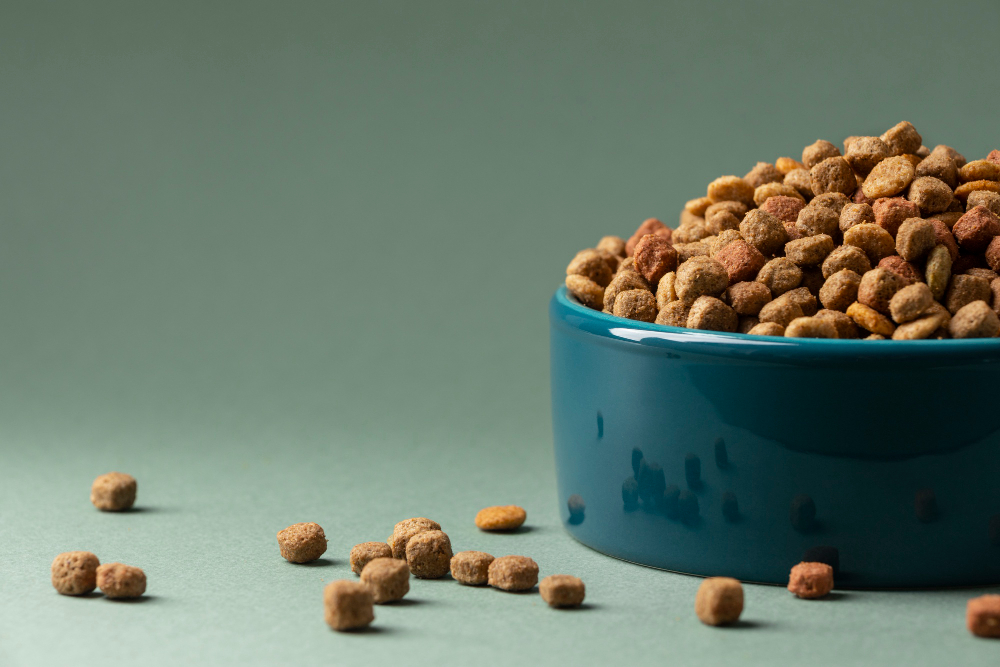
Ultra-processed pet food – the kind that comes in bags with six-month or two-year shelf lives, the kibble and biscuits and foil pouches — is the product of an industrial process designed around economics as much as nutrition.
The basic process for processed pet food works like this: raw ingredients (which may be of variable quality) are cooked at extremely high temperatures, which sterilises them and extends shelf life, but also destroys a significant proportion of naturally occurring vitamins, minerals, and enzymes. Those nutrients are then added back in synthetic form. Fats are sprayed onto the surface to make the food more palatable. Preservatives keep it shelf-stable.
The result is technically a “complete and balanced” food – it meets minimum nutritional standards on paper. But the difference between meeting minimum standards and genuine nutrition is significant, and it’s a difference that dogs feel even if they can’t articulate it.
The high-temperature extrusion process that creates kibble, for instance, can degrade certain amino acids and makes proteins less bioavailable. Synthetic vitamins added post-processing are often absorbed less efficiently than those occurring naturally in whole food. And the heavy use of starch – often 40–60% of the product by weight – as a structural binder bears no relationship to how dogs naturally eat.
The Bangalore Factor
Bangalore’s dog-owning population is worth paying attention to because it’s among the most informed in the country. The city has a high density of well-educated, well-travelled pet owners who apply the same critical thinking to their dog’s food that they apply to their own.
These are the same people who read food labels at the supermarket, who have questions about what “natural flavour” actually means, who notice when a “premium” product’s second ingredient is corn syrup. When they turn that same attention to their dog’s food, they don’t always like what they find.
The pattern that’s emerging among Bangalore’s more engaged dog parents is a move away from processed food as the default and toward whole-ingredient, minimally processed alternatives. Not raw food evangelism – most people want something practical and safe – but genuine food, made from real ingredients, that they can feel good about feeding every day.
Mega Bowl was built for exactly this customer.
The Ingredient Transparency Problem
The pet food industry has a transparency problem that goes beyond individual brands. The regulations governing ingredient labelling for processed pet food in India are less stringent than those for human food, which means that terms like “meat and animal derivatives,” “cereals,” and “various sugars” can legally cover a very wide range of inputs.
“Meat and animal derivatives” might mean good-quality chicken. It might also mean beaks, feathers, and feet — the parts of the animal that can’t be sold for human consumption. You usually can’t tell from the label.
This isn’t a minor technicality. The quality of protein is as important as the quantity. A food that lists “meat and animal derivatives” as its first ingredient might contain dramatically less usable protein than one that lists “chicken” or “mutton” — because the bioavailability varies enormously by source.
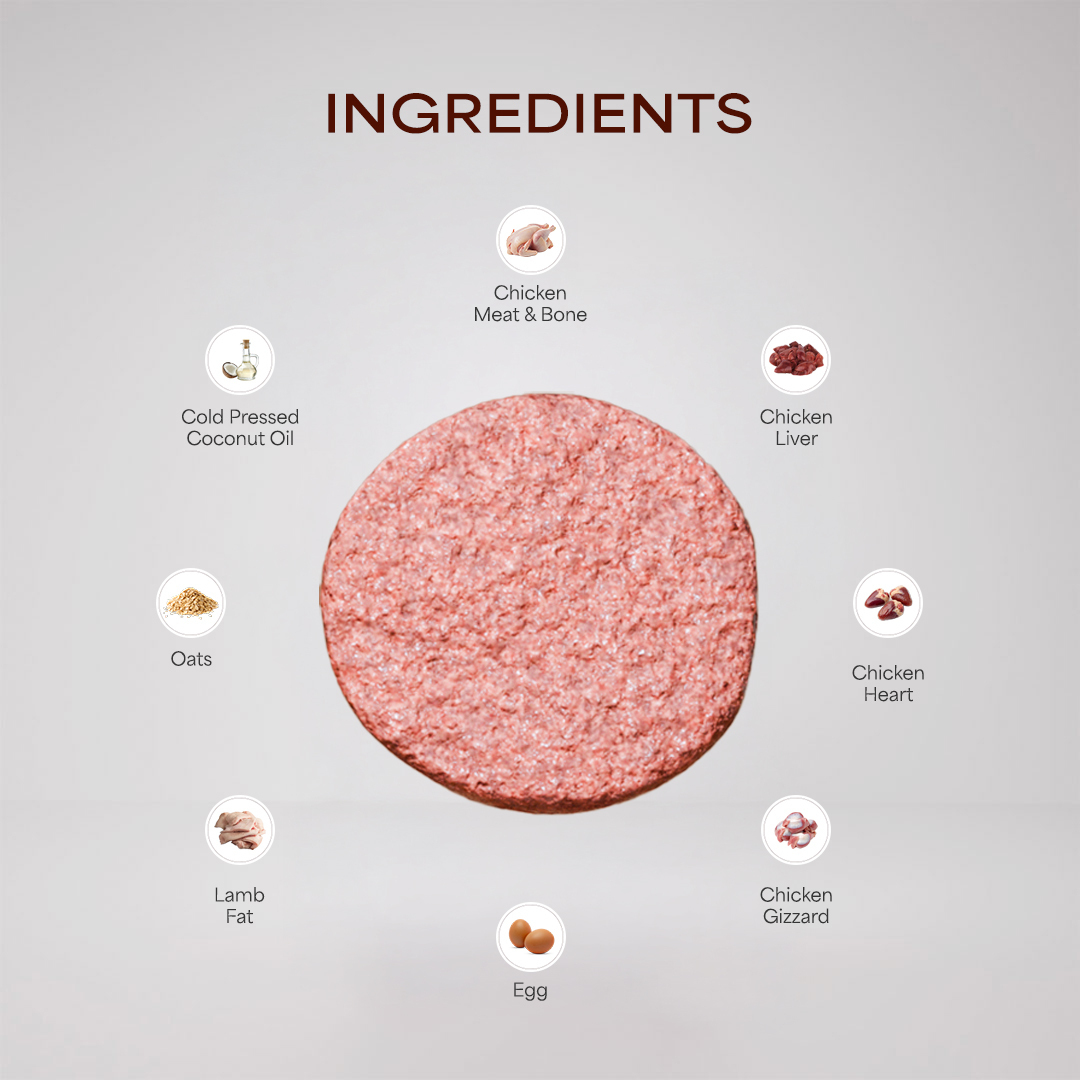
Mega Bowl’s approach is straightforward: every ingredient is named. Chicken. Rice. Carrots. Turmeric. Coconut oil. Eggs. If it’s in the bowl, it’s on the label, in plain language. There are no umbrella categories, no ingredient names that require a degree to decode.
What “Healthy Dog Food” Actually Looks Like
The shift away from processed food doesn’t require a radical lifestyle change for most dog owners. It requires clarity about what you’re actually looking for:
Recognisable proteins. Named meat sources — chicken, mutton, fish, eggs, not “animal derivatives” or “protein hydrolysate.” The protein should come from something you could point to at a market.
Minimal processing. Cooking is fine. Extrusion at 150°C, spraying with palatability enhancers, and adding synthetic vitamins to replace what the processing destroyed is a different matter.
Short ingredient lists. The more ingredients a food has, the more likely it is that you’re looking at a formulation designed around economics. Real food doesn’t need fifteen stabilisers, emulsifiers, and artificial flavours.
Transparent sourcing You should be able to ask what’s in your dog’s food and get a clear, specific answer. Not a marketing claim — an actual ingredient list in plain language.
This is the standard that Mega Bowl holds itself to. Not because it’s easier – genuinely real ingredients are more expensive and have shorter shelf lives than their industrial equivalents – but because it’s the only standard that makes sense when you’re feeding a member of your household.