
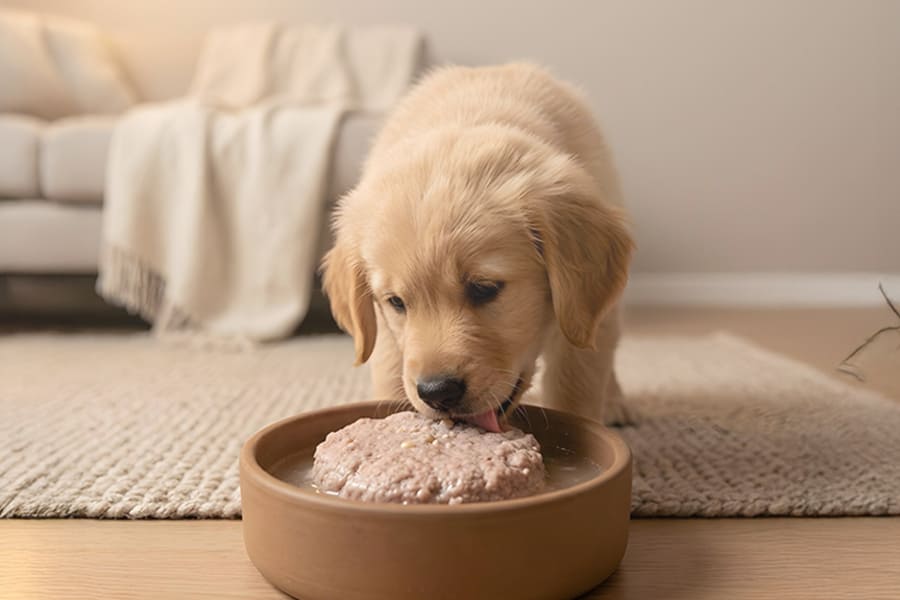
The decision to switch dog to raw diet is usually easy. The transition itself – the actual week-by-week process of changing what’s in the bowl – is where most dog owners hesitate. What if there’s an upset stomach? What if my dog refuses to eat? What if I do it wrong?
These are reasonable questions, and they deserve honest answers. The good news is that switching to a native diet is simpler and less dramatic than most people expect. Here’s how to do it well.
Why Dogs Sometimes React to Food Changes
First, the honest context: some do experience a transition period when you switch your dog to raw diet. Loose stools, a bit of gas, mild reluctance to eat the new food — these are the most common short-term reactions, and they’re not a sign that something’s wrong.
What’s happening is straightforward. Your dog’s digestive system has adapted to whatever they’ve been eating, including its particular mix of bacteria, enzymes, and digestive patterns. A sudden switch — any sudden switch, to any food — can temporarily disrupt that balance before the system adjusts.
The solution isn’t to avoid switching. It’s to switch gradually, giving the digestive system time to recalibrate without being overwhelmed.
The dogs that have the most dramatic transitions are usually the ones that go from a highly processed diet to real food overnight. A slow, deliberate approach avoids almost all of this.
The Two-Week Transition Plan
Here’s a simple framework that works when you switch dog to raw diet for the vast majority of dogs:
Days 1–3: 75% current food, 25% Mega Bowl
Start by replacing roughly a quarter of your dog’s usual meal with Mega Bowl. Keep everything else the same – same feeding times, same quantities, same routine. Most dogs will eat this mix without any hesitation. Some may sniff around it a bit if the new food smells different (real food tends to smell like food, which most dogs find appealing).
Days 4–7: 50% current food, 50% Mega Bowl
Move to a half-and-half mix. By this point, your dog’s digestive system has had a few days to begin adjusting. Keep an eye on their stool — it should be normal or close to normal. If you’re seeing very loose stools, slow down the transition and spend a few more days at the 25% ratio before increasing.
Days 8–10: 25% current food, 75% Mega Bowl
Almost there. The new food is now the dominant part of the meal. Most dogs are fully comfortable at this point.
Days 11–14: 100% Mega Bowl
Full transition complete. Your dog is now eating real food, and their digestive system has had two weeks to adapt.
Some dogs can move through this transition faster. This is particularly for those with no history of digestive sensitivity. Others, especially older dogs or those with previous gut issues, may benefit from slowing it down. Use the two-week plan as a baseline and adjust based on what you observe.
What to Expect After the Switch
Once the transition is complete, most dog owners start to notice changes within four to six weeks. These are the ones that come up consistently:
Coat condition: This is often the first visible change. A shinier, healthier coat is one of the most reliable indicators that a dog is getting proper nutrition. The natural fats in a native diet -the kinds that don’t survive industrial processing- make a noticeable difference.
Digestion: Smaller, more consistent stools are a common observation. This happens because real food has a higher proportion of digestible content and fewer indigestible fillers. Less input that can’t be used means less waste output.
Energy and temperament: Some dog owners describe their dogs as being “more themselves” after the switch – more consistent energy through the day rather than the peaks and crashes that can come from a high-carbohydrate, highly processed diet.
Enthusiasm at mealtimes: This one speaks for itself. Real food smells and tastes like food. Dogs that were previously indifferent or picky about their meals often become noticeably more interested once they’re eating something that actually appeals to their senses.
Common Concerns, Addressed Directly
My dog is very fussy — what if they won't eat it?
Real food is almost always more appealing to dogs than processed food, because it actually smells and tastes like something. If your dog is initially hesitant, the gradual transition approach usually resolves this — they get used to the new smell before the new food becomes their whole meal.
My vet recommended the brand I'm currently using.
Vets are trained primarily in clinical nutrition, not whole-food feeding, and they often default to commercial brands they know are safe and complete. Most vets have no objection to real-food diets if they’re nutritionally balanced — and Megabowl meals are formulated to be complete. If you have specific health concerns about your dog, it’s always worth a conversation with your vet.
How do I know the quantities are right?
Mega Bowl’s feeding guidelines are based on your dog’s weight. Start there and adjust based on your dog’s energy levels and body condition. A dog at a healthy weight with good energy is getting the right amount. A dog that’s gaining weight or losing condition needs a quantity adjustment — the same as with any food.
What about dogs with existing health conditions?
For dogs with specific conditions – kidney disease, food allergies, diabetes – it’s worth checking with your vet before making any dietary change. For most healthy dogs, a transition to a native diet is straightforward and beneficial.
The Bottom Line
Switching your dog to a native diet doesn’t require perfect timing, specialist knowledge, or a dramatic lifestyle change. It requires two weeks of gradual transition and a bit of attention to how your dog is responding.
After that, you’ll have a dog eating real food, 100% food ingredients, no fillers, no synthetic preservatives, nothing you’d need to Google, and you’ll have the quiet satisfaction of knowing you made a genuinely good choice.
Your dog won’t be able to thank you. But the shiny coat and the enthusiastic bowl-licking will be their answer.
Ready to make the Switch?
Nationwide delivery, native diet meals made from 100% food ingredients. Use our feeding guide to find the right quantity for your dog’s weight.