
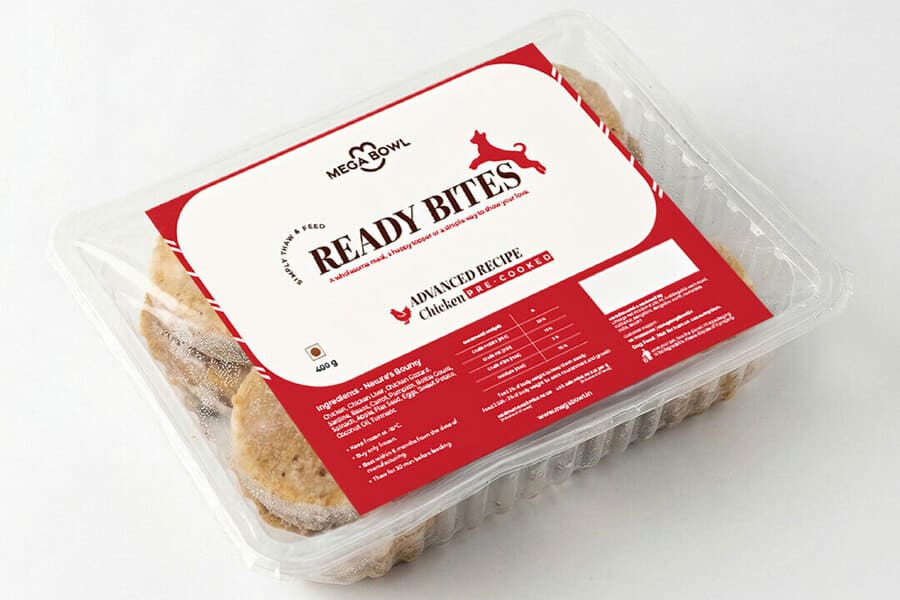
Walk into any pet store in Bangalore today and you’ll find an entire shelf dedicated to grain-free dog food. The packaging is confident. The claims are bold. *No wheat. No corn. No grains.* And dog parents — increasingly informed, increasingly discerning — have been reaching for these bags in growing numbers.
There’s just one problem: grain-free isn’t the same as natural. And in many cases, it isn’t even better.
The Grain-Free Trend: Where it came from
The shift away from grains in pet food began with a reasonable observation. Many commercial dog foods use corm, wheat, and rice as cheap filler ingredients — bulking up the product at minimal cost while delivering limited nutritional value to your dog. When pet owners started reading ingredient labels more carefully, grains became an easy villain.
The grain-free movement grew from there. And some of the criticism was valid: heavily processed grains, used in excess, can contribute to digestive issues in certain dogs. Some dogs do have genuine sensitivities to specific grains.
But the solution the industry landed on — replace the grains with legumes, peas, and lentils — turned out to create its own questions. In 2019, the US Food and Drug Administration opened an investigation into a potential link between grain-free diets heavy in legumes and a form of heart disease (dilated cardiomyopathy) in dogs. The research is ongoing, but the signal was enough to make thoughtful dog owners pause.
Grain-free, it turns out, was a marketing category. It wasn’t a nutritional philosophy.
What “Natural” actually means for a Dog
To understand what dogs genuinely need to eat, you have to look further back than the pet food aisle. You have to look at what dogs ate before there was a pet food industry at all.
Dogs in India have co-existed with humans for thousands of years. They were fed from the table — rice and dal, cooked meat and bones, leftover curries, fish. They ate real food, in roughly the proportions that real food contains. And they thrived on it. Their bodies adapted to it. Their digestive systems evolved around it.
This is the foundation of native diet dog food: the idea that what a dog’s body is built for isn’t defined by what a marketing team decided was “premium” in 2015. It’s defined by what dogs have actually eaten across their evolutionary history.
A native diet isn’t raw food evangelism. It isn’t a rejection of all cooking or processing. It’s something more straightforward: real food, made from real ingredients, in proportions that reflect how dogs actually evolved to eat.
The Ingredient Label Test
Here’s a simple exercise. Pick up your dog’s current food — whatever brand, whatever category. Read the ingredients. How many of them can you name without looking them up?
For most commercial pet foods, including grain-free varieties, the answer is: not many. Hydrolysed poultry by-product. Dried beet pulp. Menadione sodium bisulfite complex. Ethoxyquin. These are not ingredients in any meaningful culinary sense. They are industrial inputs — preservatives, palatability enhancers, synthetic vitamins added back because the processing stripped the natural ones out.
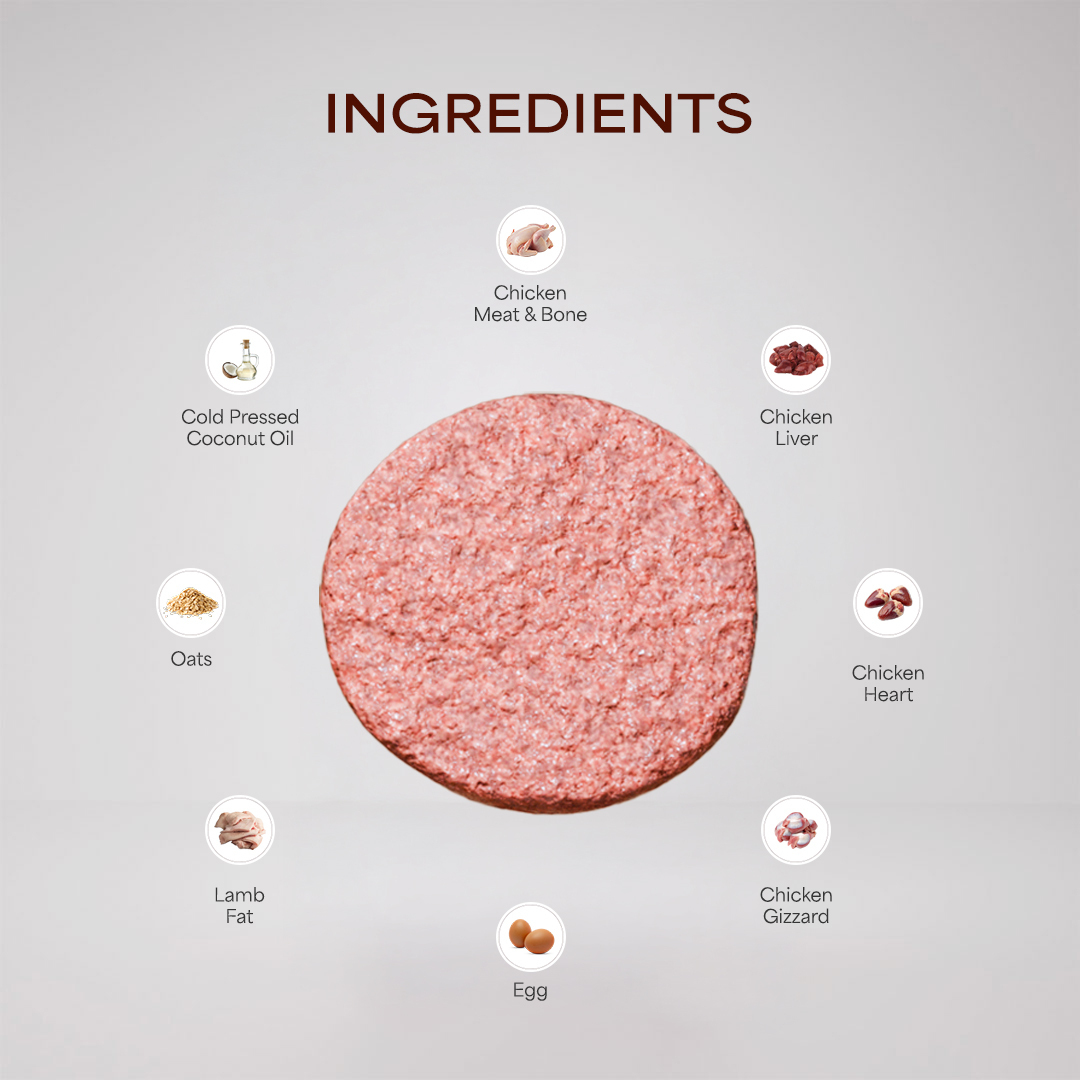
Now imagine the same test applied to Mega Bowl. Chicken. Rice. Carrots. Eggs. Turmeric. Coconut oil. Ingredients you could pick up at a market. Ingredients your dog’s body recognises.
This is the 100% food ingredients standard that Mega Bowl is built on. Every single item in a Mega Bowl meal is something you could call food — not a chemical compound required to compensate for what over-processing took out.
Why this matters particularly in Bangalore
Bangalore’s dog-owning community is one of the most engaged in India. Dog parents here read, research, and ask questions. They’ve moved past the stage of buying whatever was on the supermarket shelf and have started genuinely thinking about their dogs’ health — the same way they think about their own.
That shift has driven the grain-free trend in the city. But it’s also creating the conditions for the next evolution: away from marketing categories and toward genuine nutritional thinking.
The dogs that Bangalore families are raising — Indie dogs, Labs, Golden Retrievers, Beagles, Shih Tzus — all share the same basic nutritional history. They all descend from animals that ate real food, not ultra-processed kibble. And their bodies still function best when fed accordingly.
Grain-Free vs. Native Diet: The Actual Difference
To make this concrete, here’s how grain-free and native diet approaches actually differ:
Grain-free pet food removes grains and typically replaces them with legume-based carbohydrates. It remains highly processed, often extruded at high temperatures that destroy natural nutrients. It still relies on synthetic vitamin and mineral supplements. The “grain-free” claim says nothing about ingredient quality, processing method, or whether the product resembles anything a dog would naturally eat.
Native diet dog food starts from a different question entirely: what should a dog actually eat? The answer is real proteins (meat, eggs, fish), appropriate fats, digestible carbohydrates in measured quantities, and food-based micronutrients. The processing is minimal. The ingredient list is short and readable. The food is designed to resemble what dogs have always eaten — not to fit a marketing trend.
One is a product category. The other is a nutritional philosophy.
The Results speak for themselves
Dogs that eat native diet food don’t need a clinical study to express their verdict. Dog parents who have made the switch to Mega Bowl consistently report the same things: coats that are noticeably shinier, digestion that settles down, energy levels that are more consistent, and — perhaps most telling — a dog that is genuinely, enthusiastically hungry at mealtimes.
Real food tastes like real food. Dogs know the difference.
Making the Switch
If you’re reconsidering what you’re feeding your dog, the good news is that the transition to a native diet doesn’t require a dramatic overhaul. Mega Bowl’s meals are designed to be introduced gradually – starting with a mix of your dog’s current food and Mega Bowl, then transitioning fully over a couple of weeks. Most dogs adapt quickly and without issue.
The harder transition is the mental one: accepting that the grain-free bag with the striking packaging and the premium price point isn’t necessarily better just because it removed one ingredient category. Real improvement in your dog’s diet comes from adding real food — not from subtracting a marketing villain.
The Bottom Line
Grain-free was a step in the right direction. Dog owners started paying attention to ingredients. They started questioning the default. That matters.
But the destination isn’t grain-free. The destination is genuine nutrition — real, natural dog food, made from real ingredients, designed around what dogs actually evolved to eat.
That’s what native diet means. That’s what Mega Bowl is.
Your dog doesn’t care what the trend is. They care whether what’s in their bowl is real.